Louis Theroux once looked into a camera and explained, slowly, that he is not Jewish. He had already said it. He would have to say it again. The clarification was absurd because the accusation was never meant as a factual description. It was a trap designed to turn a journalist into a conspiracy cartoon so the audience would stop listening.
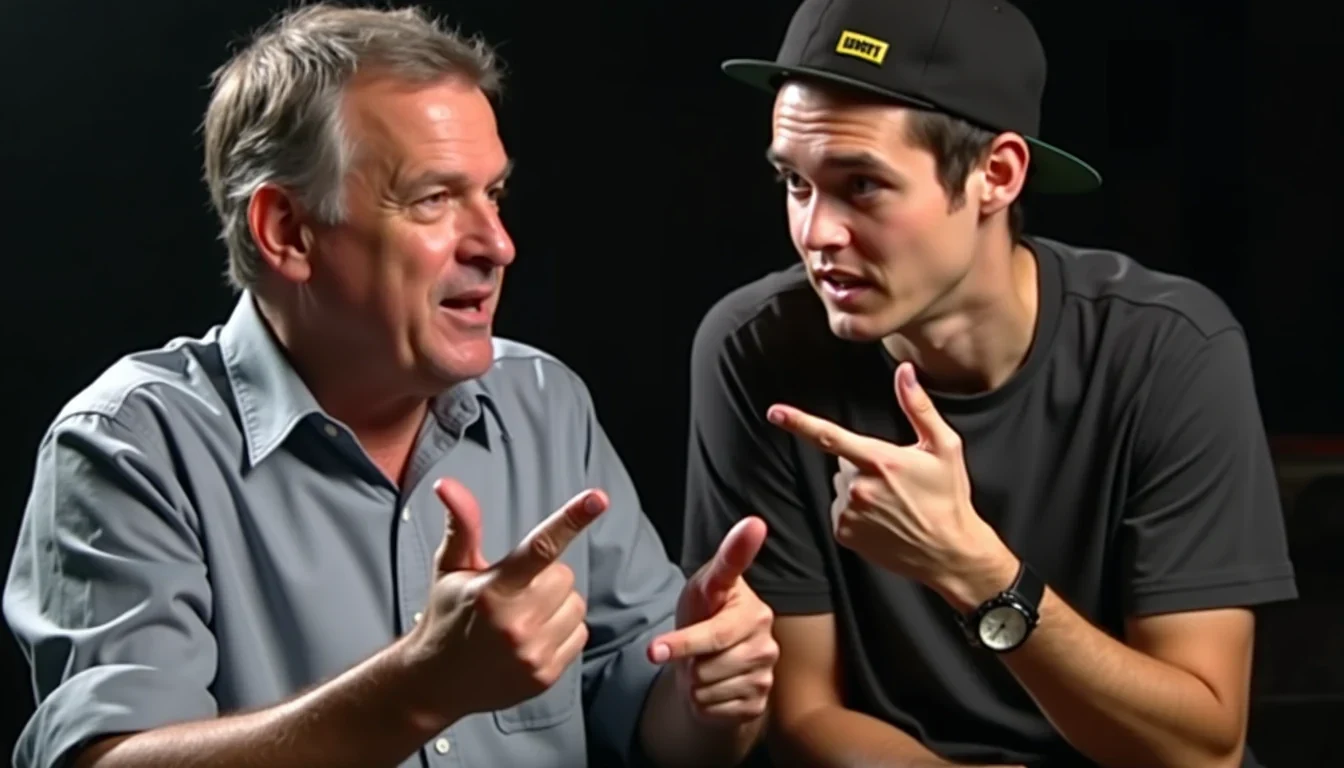
The scene is part of Theroux’s latest streaming project, Inside the Manosphere, yet the maneuver predates the film by years. When Theroux challenged Myron Gaines of Fresh and Fit over unsupported health claims, the response arrived not as data but as slurs. Viewers flooded social channels with antisemitic abuse. Ed Matthews told Theroux to his face that Jewish people control the planet. Harrison Sullivan, the influencer known as HSTikkyTokky, mocked Theroux by pressing his fingertips together and calling them Jew fingers. Sneako joined the pile-on, helping frame the interview as a hostile media hit rather than a simple request for proof. Theroux is an atheist with no Jewish heritage, a point he has driven home repeatedly, including in a direct statement: “I’m not actually Jewish. I have no problem with being identified as Jewish, but it’s just not a factual statement.” The correction bounces off because the people repeating the slur are not interested in accuracy. Their goal is to change the subject.
The mechanics of the smear
This is not random trolling. It is a structured deflection. The influencer invents a Jewish identity for the critic, then activates the ancient trope that Jewish people secretly steer media and world events. Suddenly an objective question becomes a supposed coordinated attack by a dishonest elite. The critic is no longer a reporter doing his job; he is a puppet in a hidden scheme. The audience forgets the original claim and rallies around the performer who has cast himself as the victim. Myron Gaines never had to produce evidence for his health advice because the conversation shifted to Theroux’s imaginary agenda. The slur did the heavy lifting.
Why falling for this wrecks your brand
In South Africa, where the law takes a dim view of hate speech and the business community is visibly diverse, associating yourself with this rhetoric is career poison. Ambitious people building an online presence need trust more than they need virality. If your feed shares influencers who dismiss every hard question by smearing the questioner’s ethnicity, you signal that you cannot handle scrutiny without prejudice. Brands, collaborators, and serious employers notice. The Equality Court has dealt with online hate speech before, and the country’s constitutional values do not leave much room for dog-whistling about shadowy elites. A personal brand built on conspiracy and bigotry collapses the moment you need a reputable sponsor, a corporate partnership, or a professional reference. Credibility is an asset; prejudice is a liability.
How to spot the tactic before it infects your feed
Protecting your professional reputation starts with recognizing when someone is trying to sell you a distraction. If an influencer answers criticism by attacking the critic’s identity rather than the evidence, you are watching a deflection, not a debate. Look for vague warnings about hidden controllers who manipulate world events without proof. Demand sources, not vibes. When a creator labels a journalist part of a media conspiracy simply because he asked for facts, ask yourself what the creator is hiding. Cross-check extraordinary claims against reputable reporting. Notice when a conversation pivots from substance to ethnicity. These habits keep you informed and employable. In a digital economy where your timeline is part of your CV, the ability to sift credible information from manufactured outrage is a genuine competitive advantage.